The Movement
Belonging, made visible.
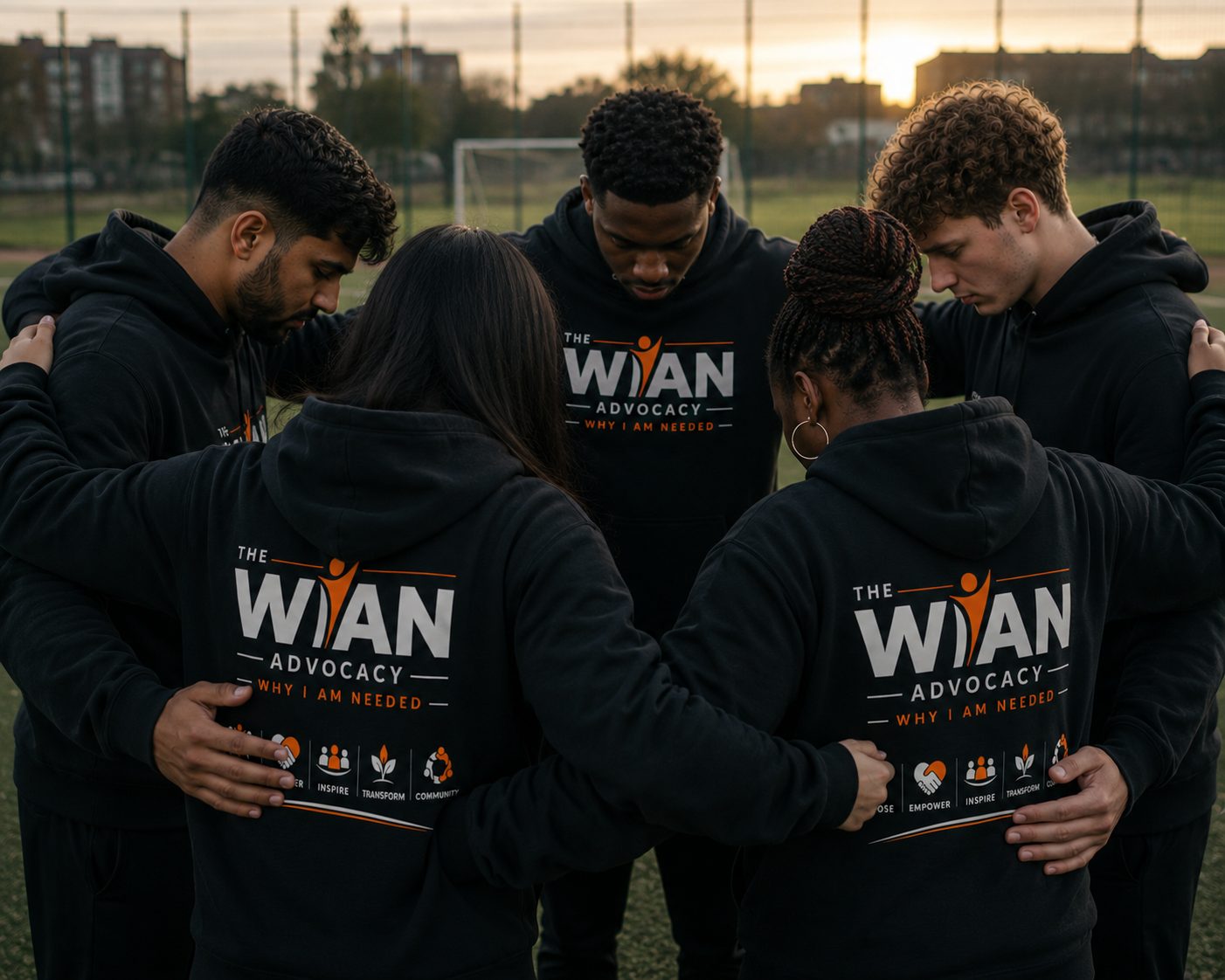
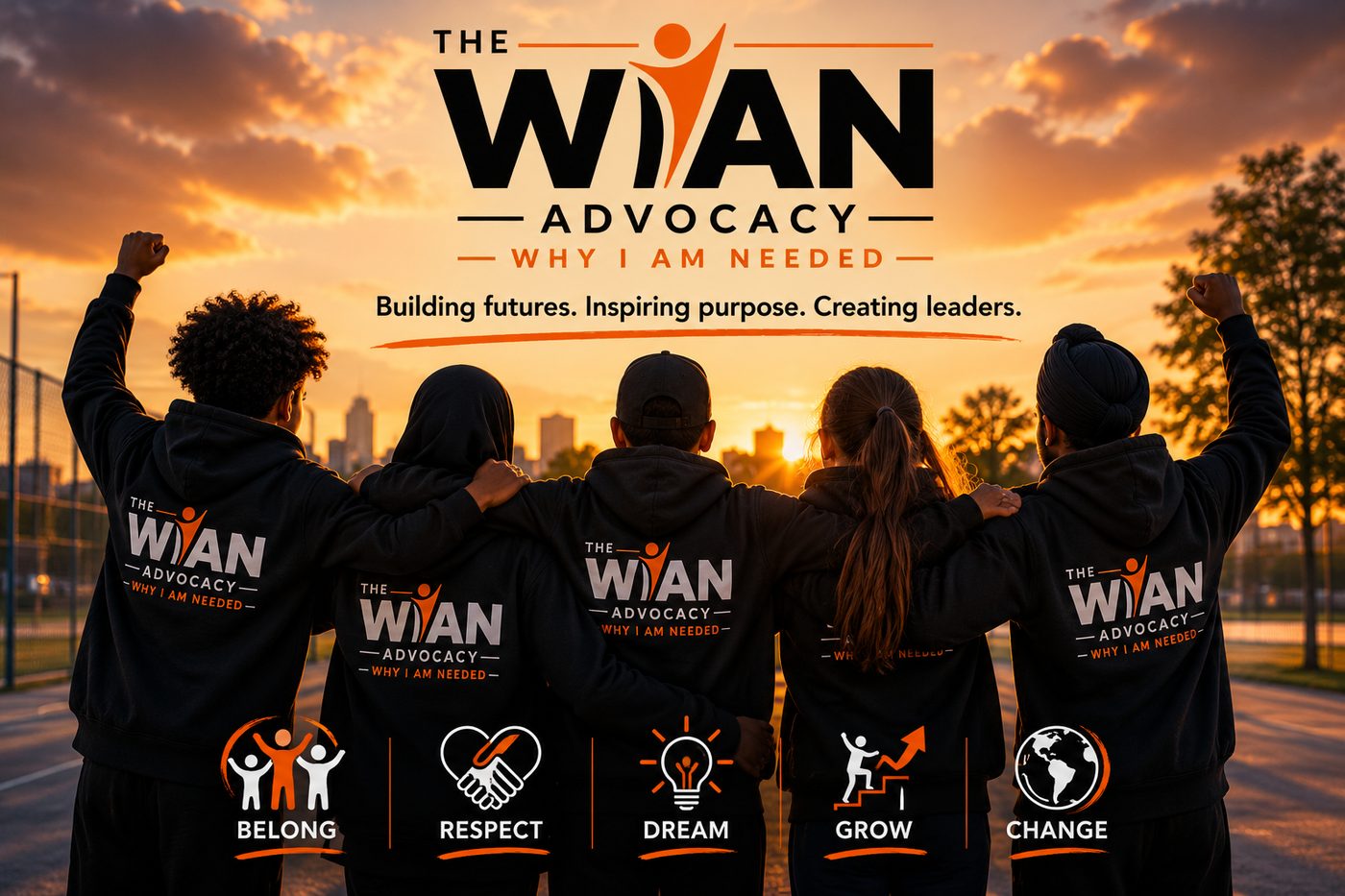
WIAN is more than a programme — it's an identity people carry with them. This is what it looks like when a group of young people find their place in something bigger.
I'm Adewale — advocate, civic leader, and founder of the WIAN movement. I help young minds aged 5–15 find purpose early and build strong, positive character that helps prevent crime and destructive influences — and I help young people aged 16–25 who are not in education, employment or training discover their value before exclusion, crime or the justice system writes their story for them.
You made mistakes, but your future is still being written.
My conviction was not built on theory. It was built on what I saw.
I spent time working as a prison custody officer, where I met people of real talent and promise whose lives had been redirected by trauma, negative influence, poor decisions, or simply a lack of opportunity. I watched intelligent young people become trapped in cycles that began long before they were ever locked away.
That experience changed how I understand the problem. Crime, gangs and addiction are rarely the real issue — they are symptoms. The deeper absence is one of purpose, identity, belonging and positive direction.
Today, through my work in research, development and civic engagement — including a roundtable with policymakers such as Rebecca Long-Bailey MP — I'm building WIAN into a prevention-first movement that starts early. For children aged 5–15, that means discovering purpose and building strong, positive character before peer pressure and negative influence take hold. We also prioritise Salford's 16–25s who are not in education, employment or training, because that is where the need is sharpest and where early intervention changes the most lives.
If we help people discover purpose and contribution, we build a life-changing movement. WIAN starts before the crisis — not after.
Most interventions engage young people only after gangs, exclusion, or the justice system are already involved.
Teenagers drawn in early rarely break out — prison can become a mentorship and grooming system of its own.
Many in custody are bright and capable — creative genius pointed in the wrong direction for want of guidance.
A safer society isn't built by locking people away, but by sending them back equipped to live and contribute.
WIAN's first priority is young people aged 16 to 25 who are not in education, employment or training — the group professionals call NEET. They are not lost causes. They are talent and potential without a pathway.
Time spent NEET damages mental and physical health and sharply raises the odds of long-term unemployment, low pay and contact with the justice system. This is exactly the gap I watched open in the prison system — and exactly where prevention works.
Starting where the need is greatest — SalfordWIAN is built to follow a person from first identity through to second chances — a complete approach, not a single touchpoint.
Helping people discover why they matter, and who they are needed to become.
Building integrity, responsibility and resilience that hold under pressure.
Keeping people away from crime and destructive influence before it takes hold.
Supporting genuine transformation and self-worth during imprisonment.
Walking with people as they return to society — equipped, not stigmatised.
WIAN is more than a programme — it's an identity people carry with them. This is what it looks like when a group of young people find their place in something bigger.
Hope first for the young. Honesty about risk as choices grow. Purpose into action for adults. The same truth at every age: you are needed.
Early purpose discovery. Not crime and consequence, but possibility — nurses, teachers, engineers, inventors. Children begin to see themselves as future contributors, not future statistics.
Identity and character formation, as peer pressure begins. Leadership, resilience, self-esteem, and honest conversation about friendship choices and online influence.
Greater honesty about gangs, county lines, exploitation and consequence — through real stories, not fear. This is where lived prison experience speaks with authentic weight.
Purpose into action — employment, entrepreneurship, civic engagement and community leadership. The question becomes: how will I leave my community better than I found it?
Whether you're a school, a community organisation, a justice agency or a fellow leader — there's a way to bring WIAN to your people.
Authentic talks for schools, youth groups, conferences and faith settings — grounded in real experience inside the justice system.
Designing and advising early-intervention, rehabilitation and reintegration initiatives using the five-pillar WIAN framework.
Connecting grassroots realities with policy-level thinking — partnerships, roundtables and advocacy across sectors.
If WIAN's mission to reach NEET young people resonates with the work you do — or the change you want to see in Salford, Greater Manchester and beyond — I'd love to talk.
Start a conversation →Tell us why you're reaching out and we'll get back to you at the address you provide. Every enquiry reaches info@thewianadvocacy.org.